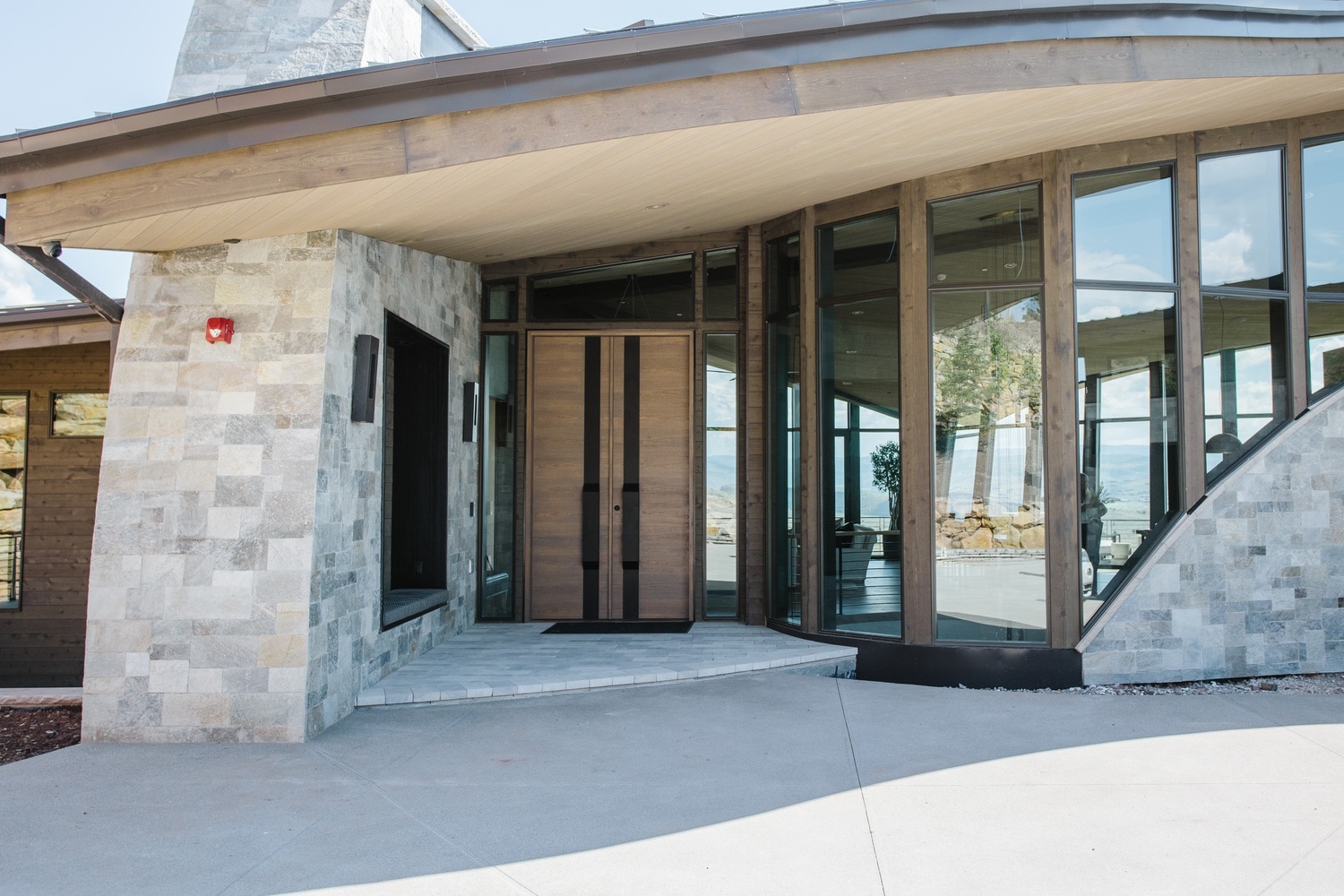
Sweeping architecture, panoramic views and richly layered interiors redefine mountain living in a striking Tuhaye retreat
Photos by Amanda Peterson
There are many things about this Utah mountain home to obsess over. There’s the location: nestled into the folds of Tuhaye’s rolling terrain, the house is oriented to capture sweeping views of the Wasatch Range and the Talisker Club golf course. There is the architecture—designed by Michael Upwall of Upwall Design, it is defined by sweeping curves, angled planes and walls of glass that draw the landscape inside. And there are the layers of furnishings and finishes that create the richly textured interiors for which interior designer Allison Campbell is known.
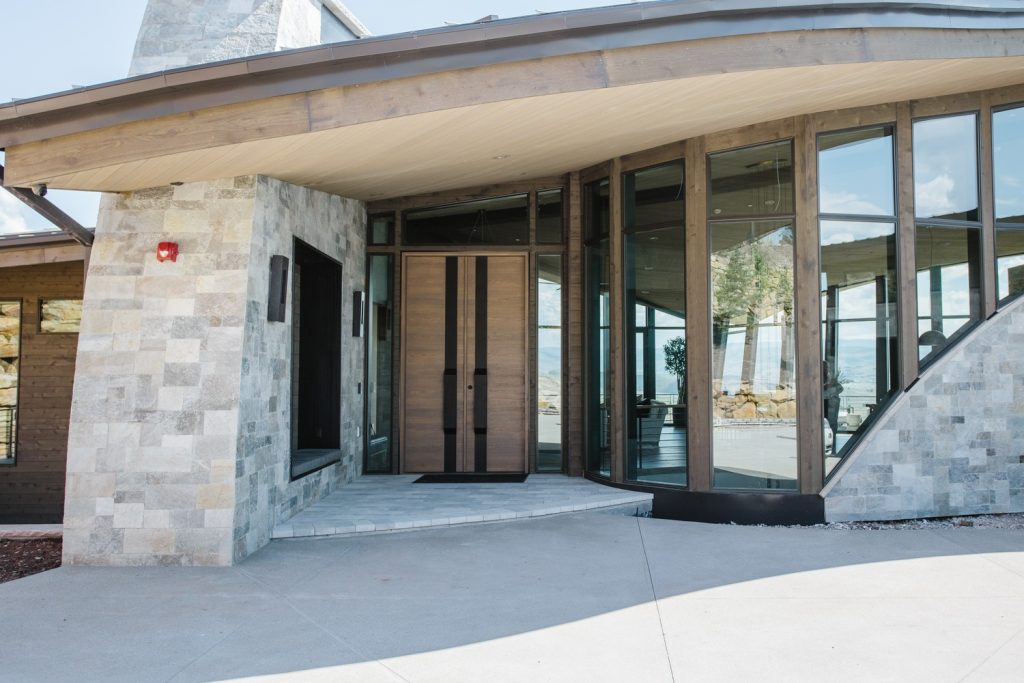
Yet for all its bravura, the home was never meant to be a showpiece alone. The homeowners envisioned a place that could host a full house of grown children and friends one weekend, then feel serene and restorative the next. “The clients were drawn to strong forms and bold architecture, but they were equally focused on how the house would feel when it was full of people—and when it was completely quiet,” Campbell says.
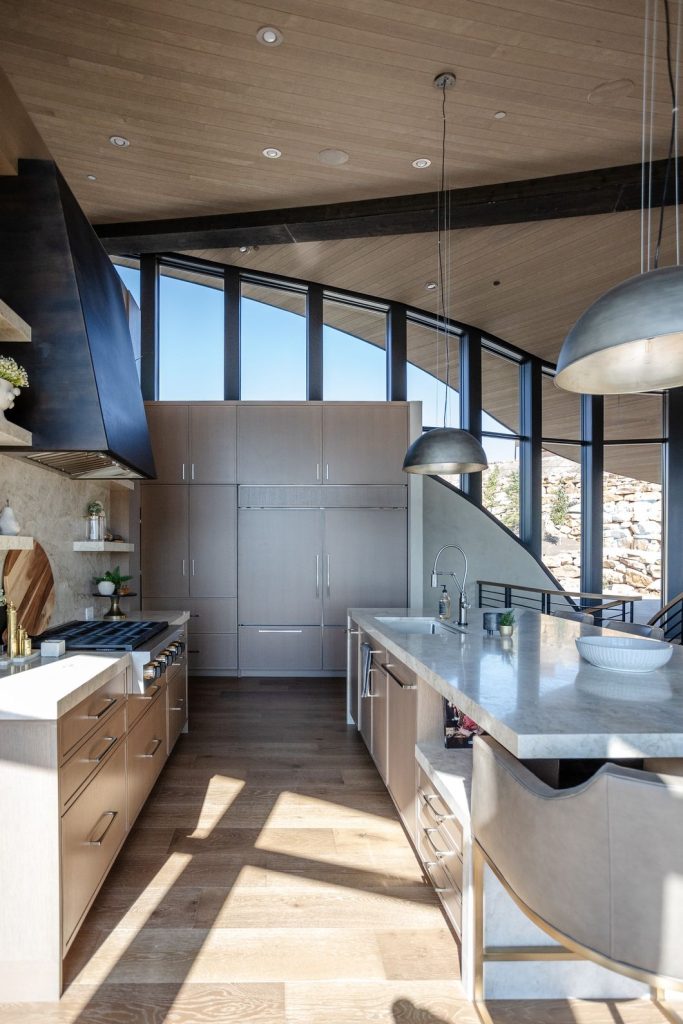
Upwall approached the commission with that dual ambition. The architecture feels dynamic but never overwhelms daily life or the landscape beyond. “For me, every design begins with the site. I believe homes should be ‘of the land’ as if they have always been there, but still fresh and ‘of the moment,’” Upwall explains.
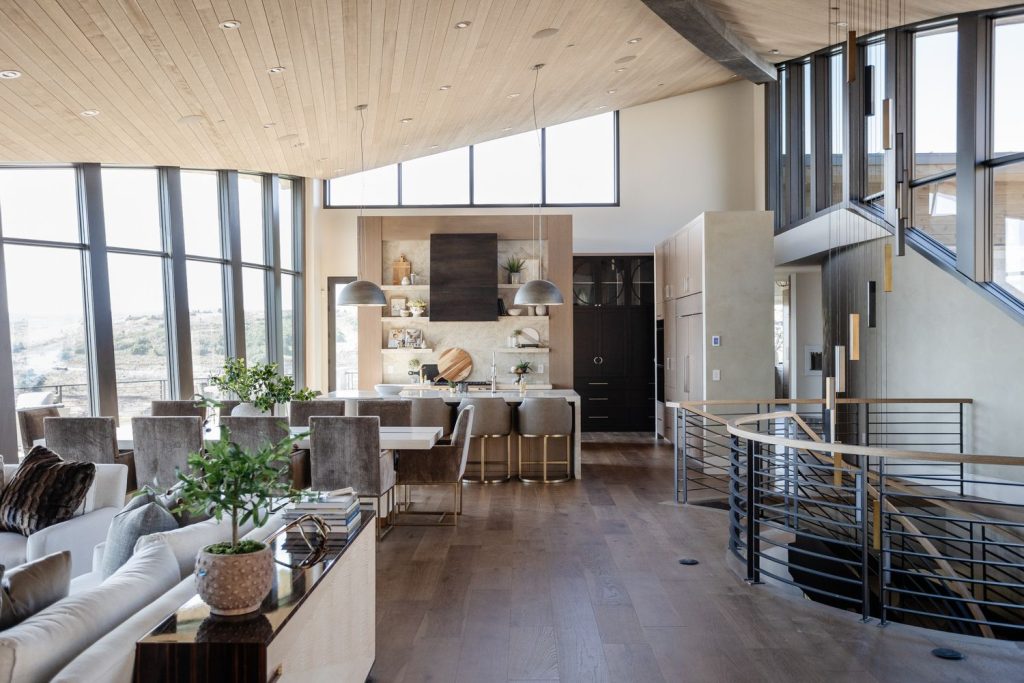
Volumes expand and contract, ceilings tilt and soften, and light shifts throughout the day. That sculptural fluidity demanded precision. “Upwall’s architecture is always a challenge to build, so being flexible and patient is key,” says builder Jason Groscost, who coordinated steel, stone, wood and glass to ensure every junction felt intentional.
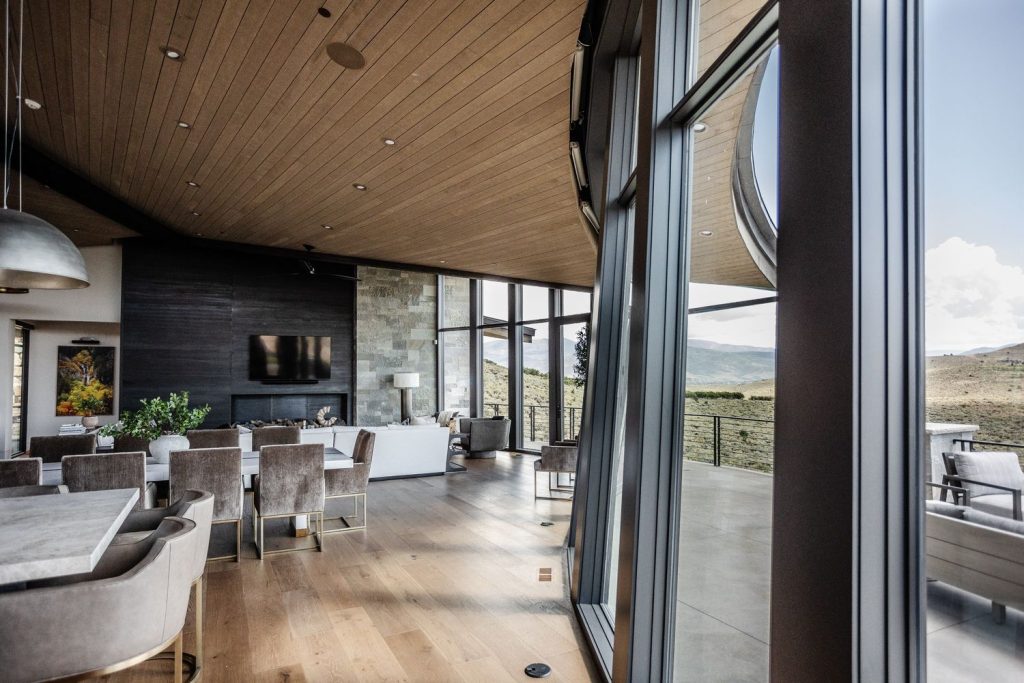
Inside, the interiors settle into warmth and tactility, a balance that finds its fullest expression in the great room. Floor-to-ceiling glazing rises to meet a gently arched hemlock ceiling that echoes the surrounding hills. “The great room radius window wraps around and embraces the view of the golf course, while leaning out in deference to the landscape,” Upwall explains. “Meanwhile, the dynamic rooflines reach up to the sky.” Groscost adds, “The impressive span goes from end to end with a massive beam that is not only curved but also bent. This gave us a ‘potato chip’–shaped roof that is visible from the road.” Grounding elements, including a stone and hot-rolled steel fireplace, anchor the space. “With views this expansive, it was important to give the eye places to land. We wanted the interior to feel composed, not overwhelmed by what’s outside,” Campbell explains.
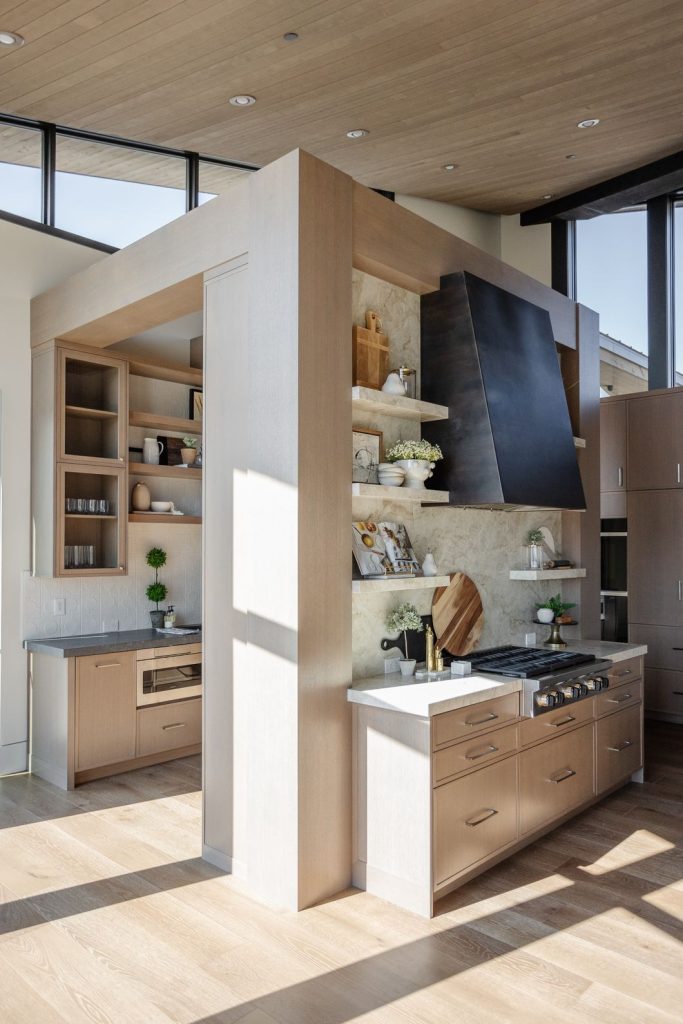
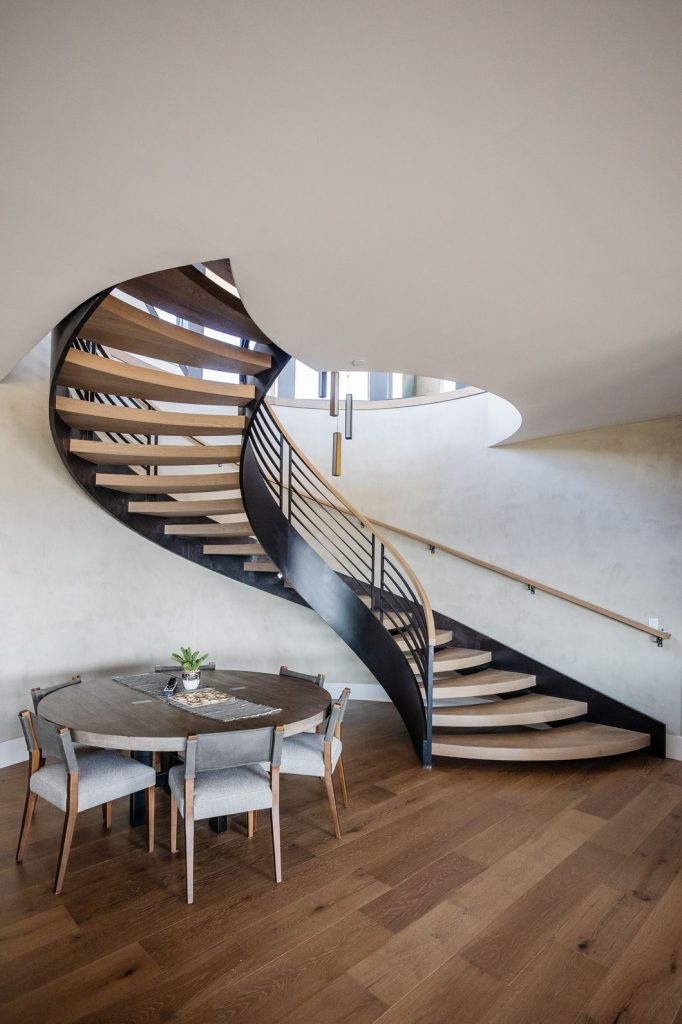
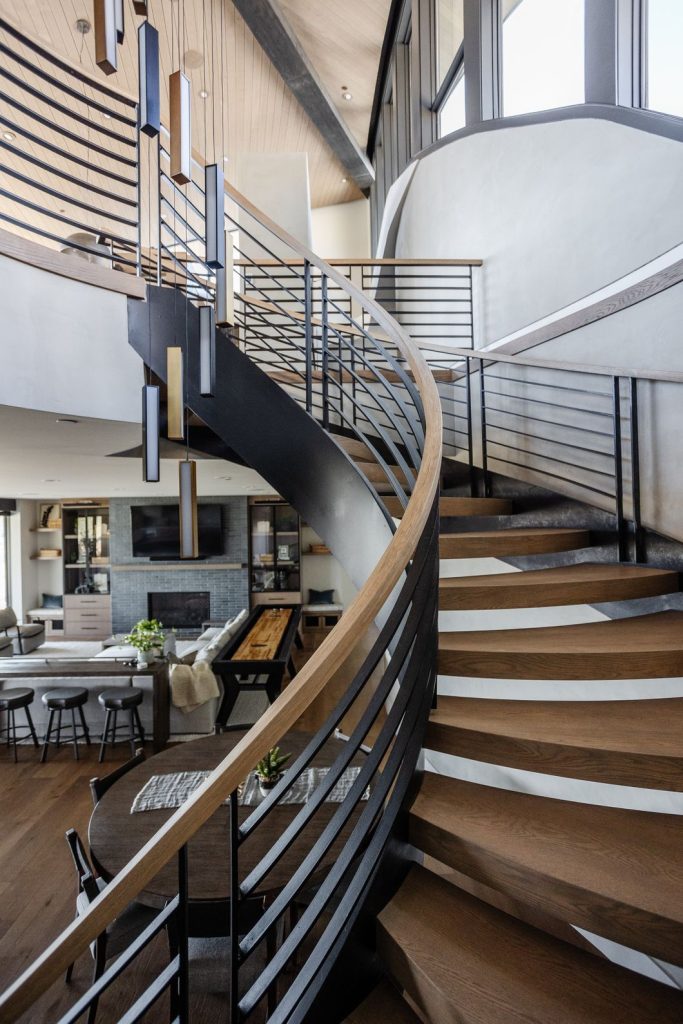
The open plan flows seamlessly from kitchen to dining to living areas. Furnishings, ceiling shifts and material transitions define spaces subtly. In the kitchen, a freestanding wall beneath clerestory windows required a beam-and-column solution to vent the hood while adding structure. The steel hood echoes the fireplace, reinforcing a sense of continuity. A sweeping circular staircase of white oak, glass and steel provides a sculptural transition between floors. Campbell designed the treads to extend from the wall rather than mount to a center spine of iron. “They resemble cascading piano keys,” she observes. A multi-pendant light adds drama overhead.
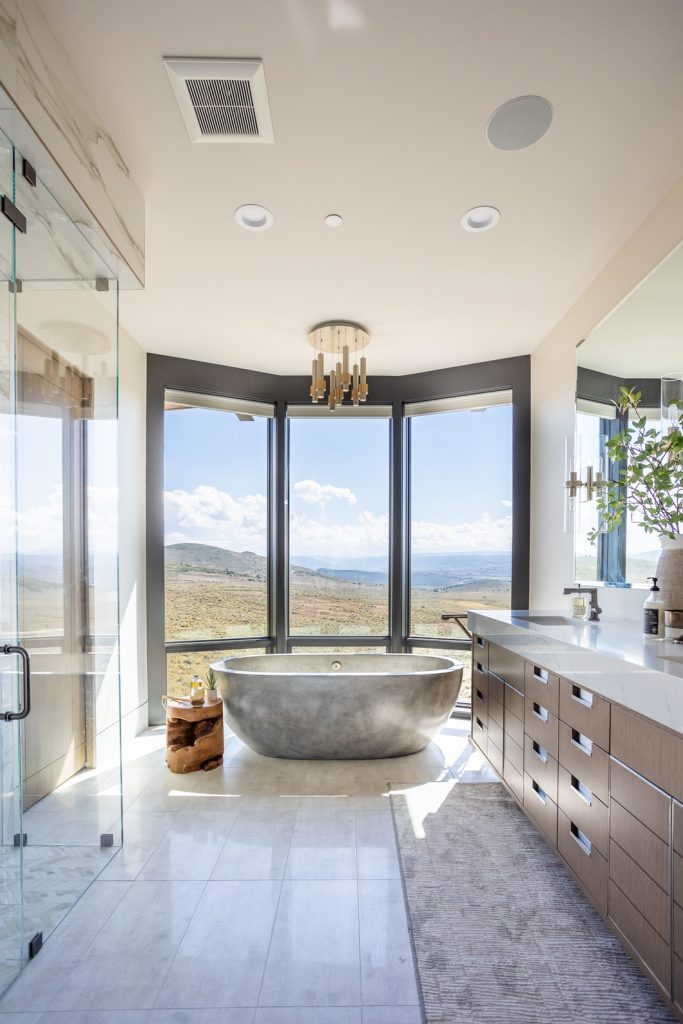
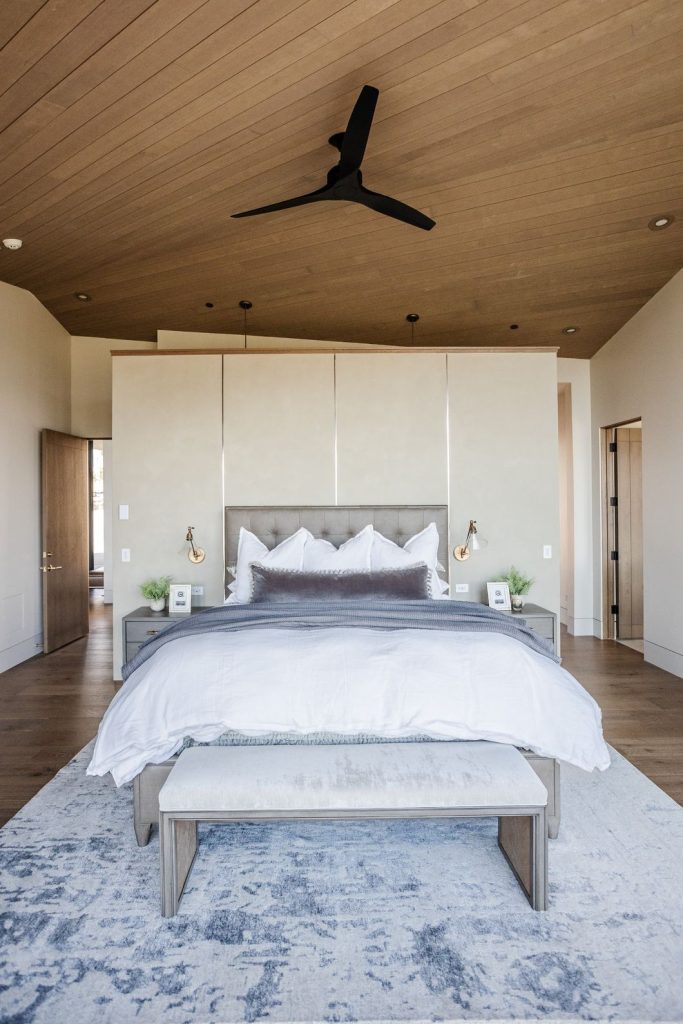
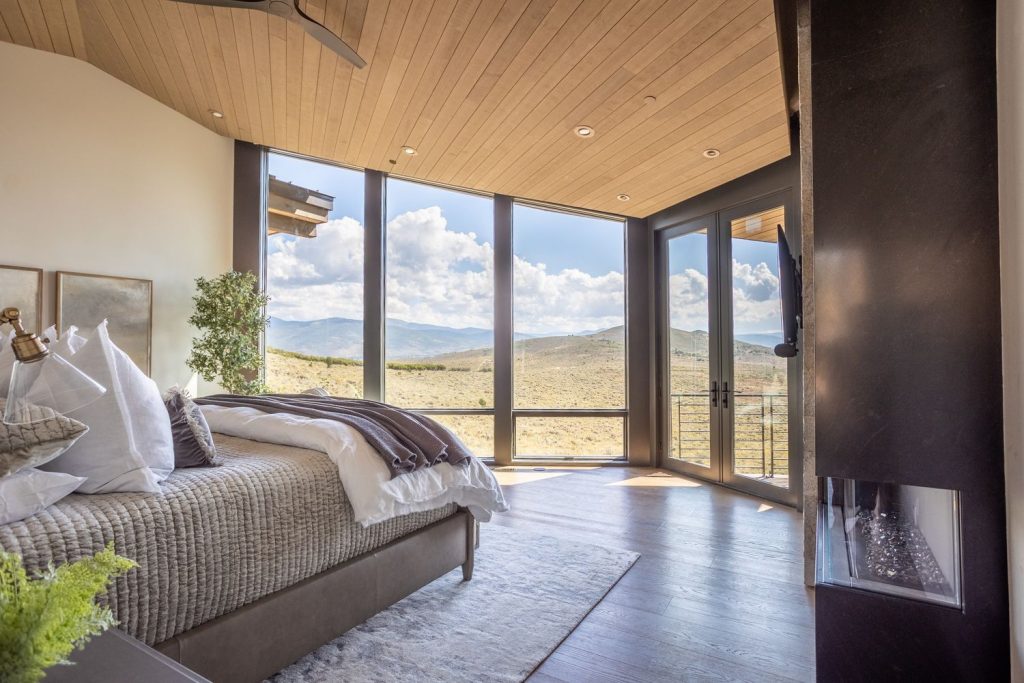
Private spaces lean into a quieter design language. The primary suite uses soft neutrals and layered textures so the view remains the focal point. Wood ceilings and a freestanding headboard wall add warmth without enclosure. The bath is centered around a sculptural concrete tub set before a wall of glass. “In more intimate rooms, restraint becomes the luxury. These spaces are about calm and clarity, not excess,” Campbell says.
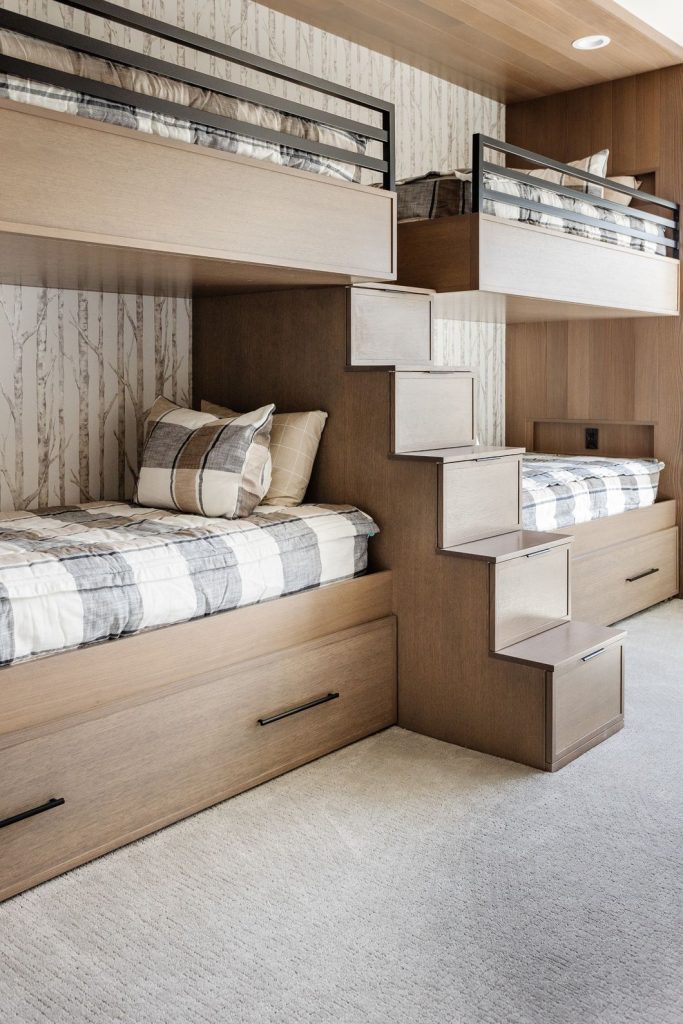
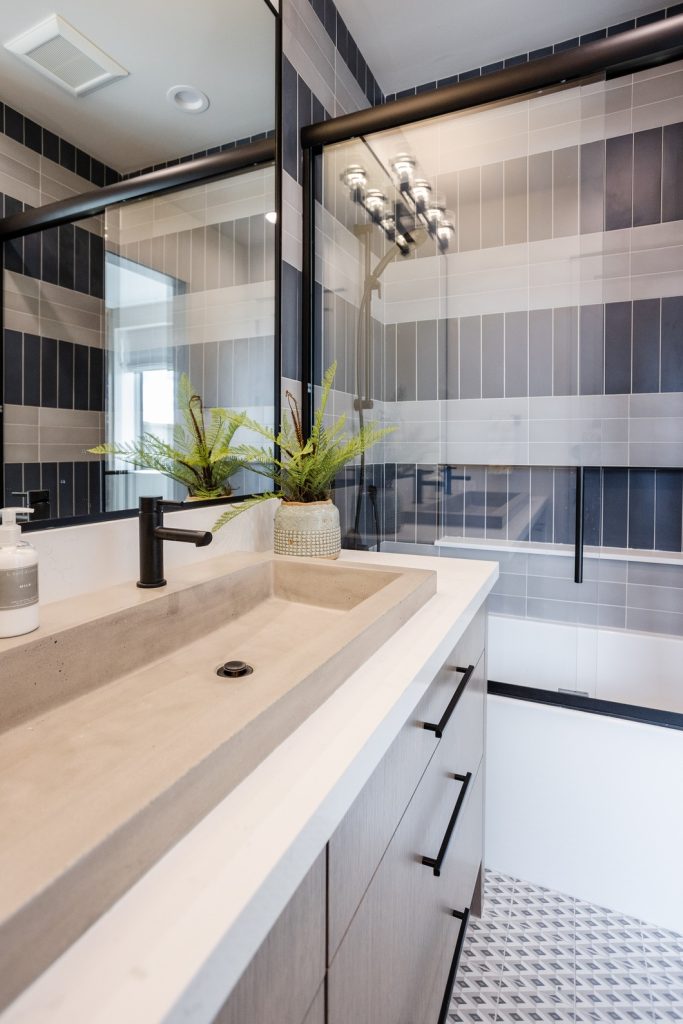
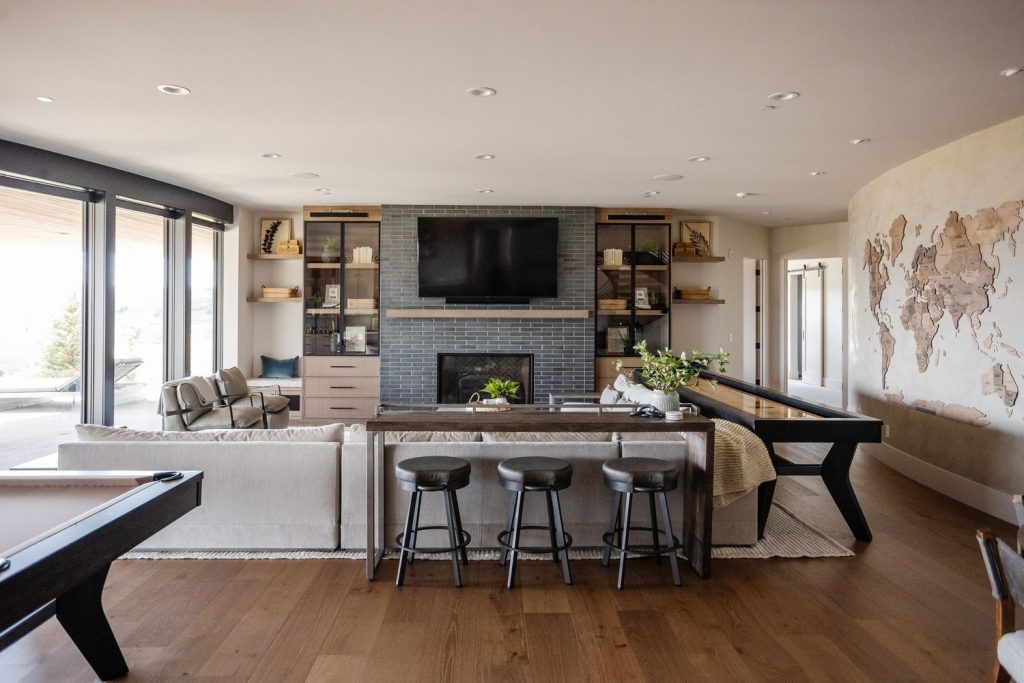
Downstairs, the mood shifts to relaxed family living. A sectional anchors the lounge, while a game table tucks beneath the staircase. Materials maintain continuity with a lighter touch. “We chose a dark brick and white oak for the built-ins and the fireplace surround. We added steel and glass to keep it light and airy in a normally darker space,” she adds. The same steel-and-glass details on the nearby kitchenette ensure consistency across the space.
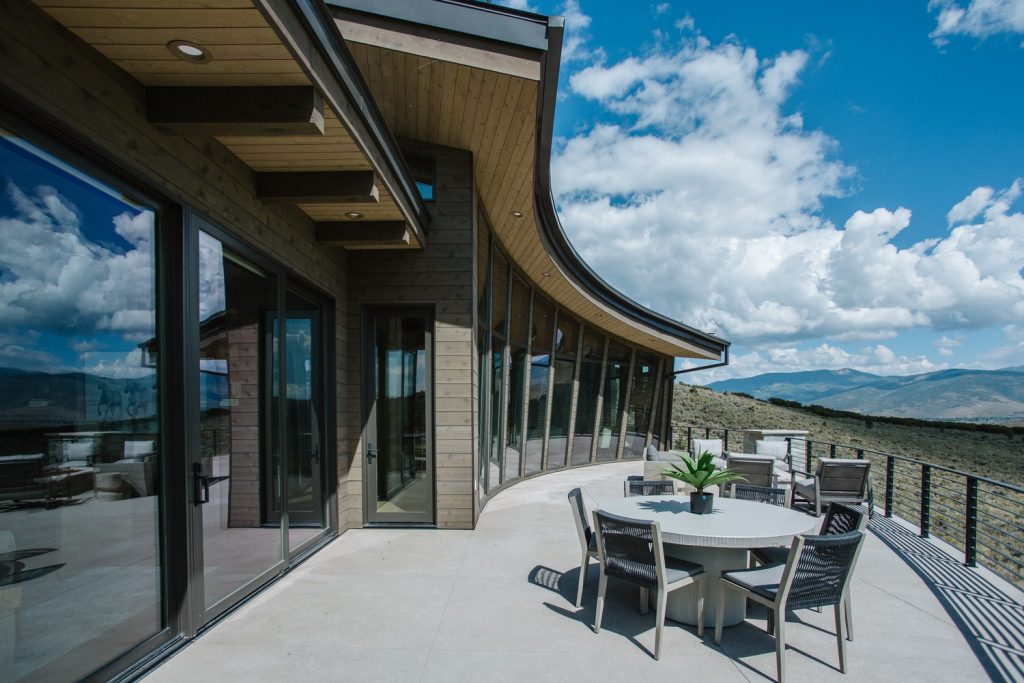
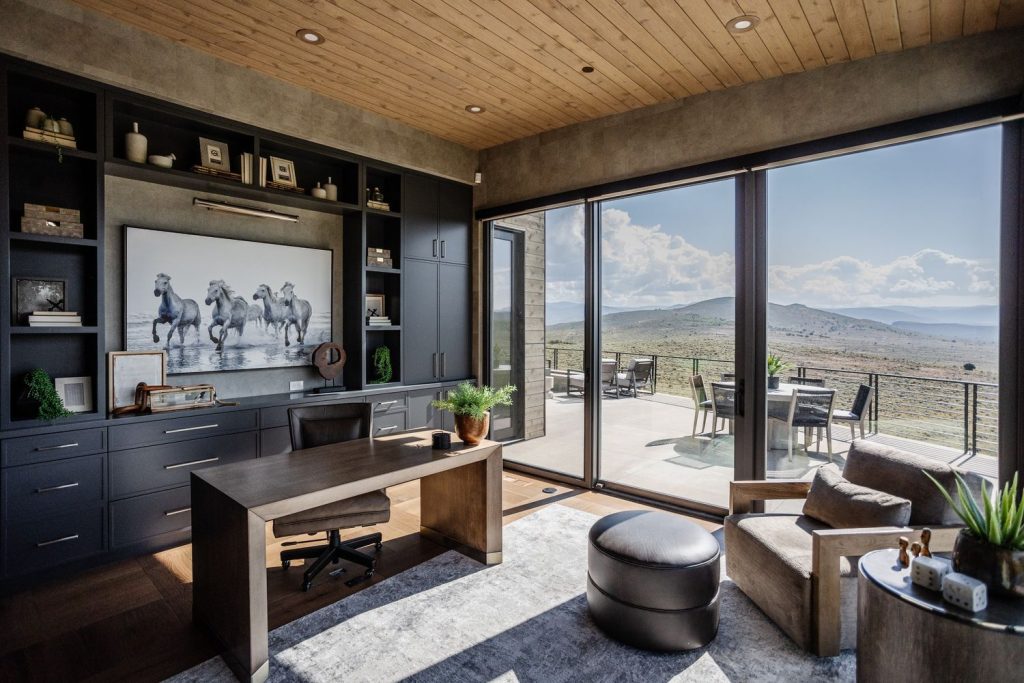
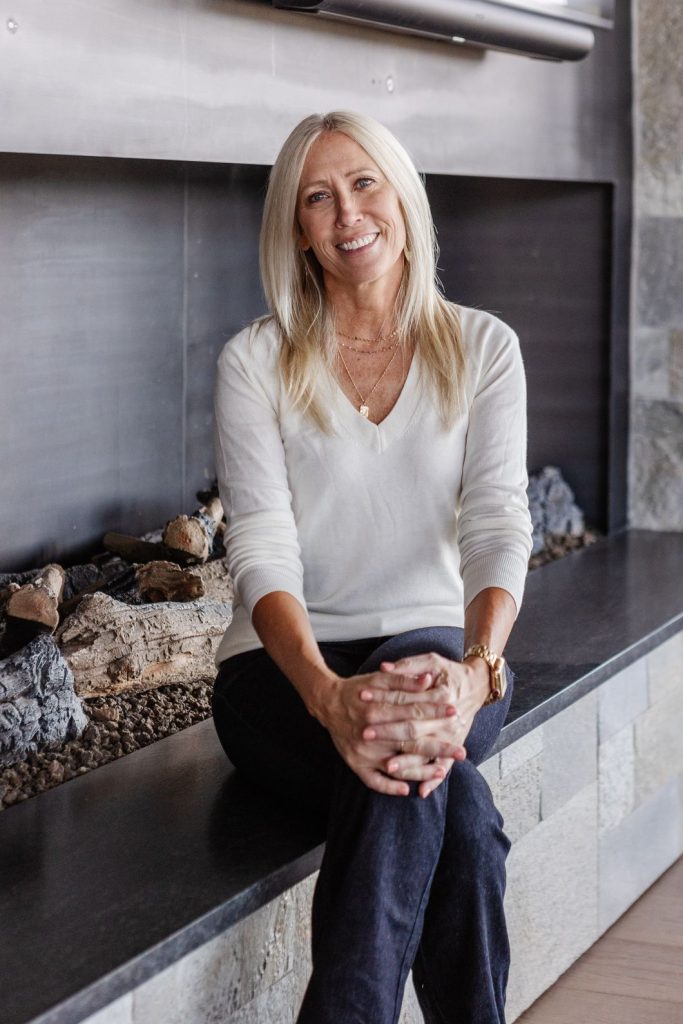
The success of the home lies not just in its dramatic forms but also in its fluency. Sightlines extend and redirect, and public and private zones feel distinct yet connected. “The architecture set the tone for everything,” Campbell explains. “Our role was to translate it into spaces that feel grounded, functional and livable year-round.” That balance was central to Upwall’s approach—design a house inspired by and as dynamic as the terrain that surrounds it—expressive without excess, technically ambitious yet emotionally grounded and entirely attuned to daily life.
Read more of our home decor coverage and get the latest on the decorating and design encompassing Utah. And while you’re here, subscribe and get four issues of Utah Style and Design, your curated guide to the best decor in Utah.